Synthetic Soap Base
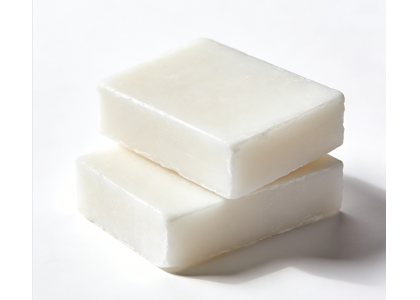
Synthetic Soap Base: A Comprehensive Analysis from Composition to Application
In daily life, soap products such as toilet soap, body wash soap, and facial cleansing soap have long been indispensable cleaning supplies. However, soap base, the core raw material of these products, is rarely deeply understood by people. Among them, synthetic soap base occupies an important position in the daily chemical industry due to its stable performance and diverse adaptability. This article will conduct a comprehensive and in-depth analysis of synthetic soap base from its definition, composition, production process, core characteristics to application scenarios and purchasing points, leading everyone into the world of synthetic soap base.
I. What is Synthetic Soap Base? Breaking the Misconception between "Natural" and "Synthetic"
First of all, we need to clarify the essence of soap base. Broadly speaking, soap base refers to "fatty acid salt" formed by the saponification reaction between fatty acids and alkalis, which is the core substance that provides cleaning power for soap products. Synthetic soap base, however, is not the ingredient that is misunderstood by the public as "completely artificially synthesized and without safety guarantees". Its core definition is "a soap base raw material with high component purity and stable proportioning, prepared through industrial-grade standardized processes", which is different from the natural soap base in traditional handmade soap that is "directly saponified on-site with animal and plant oils and alkalis".
To put it simply, natural soap base is "making the base while making the soap", while synthetic soap base is "first making the base in a standardized way, then making the soap according to needs". The core cleaning component of both is fatty acid salt. However, synthetic soap base optimizes the component purity and stability through industrial production, avoiding impurities such as unsaponified oils and free alkalis that may remain in natural soap base, and it is also more convenient to adjust the formula according to different needs.
II. Composition of Synthetic Soap Base: Precise Matching of Core and Auxiliary Ingredients
The composition system of synthetic soap base is not a single substance, but a composite system composed of core active ingredients, moisturizing and conditioning ingredients, stabilizers, etc. The accuracy of its proportioning directly determines the performance of the soap base.
1. Core Active Ingredients: Source of Cleaning Power
The core of synthetic soap base is "high-purity fatty acid salt". Common sources of fatty acids include palmitic acid, stearic acid, lauric acid, myristic acid, etc., and the alkali agents are mostly sodium hydroxide (caustic soda) or potassium hydroxide. The combination of different fatty acid salts will result in different cleaning power and skin feel: for example, laurate soap has strong cleaning power and is suitable for oily skin; stearate soap can improve the hardness and moisture of the soap, making it suitable for dry skin. In industrial production, these fatty acid salts will be purified, and the purity can usually reach more than 95%, which is much higher than that of natural soap base.
2. Moisturizing and Conditioning Ingredients: Balancing Cleaning Power and Gentleness
To solve the problem of "excessive cleaning power leading to dryness" of traditional soap base, synthetic soap base will be added with moisturizing and conditioning ingredients such as polyols (e.g., glycerin, propylene glycol), natural oils (e.g., coconut oil, olive oil), and plant extracts (e.g., aloin, panthenol). These ingredients can form a protective film on the skin surface during the cleaning process, reduce water loss, and at the same time alleviate the irritation of soap base to the skin barrier, making the skin feel both fresh and moisturized after cleaning.
3. Stabilizers and Functional Additives: Ensuring Quality and Expanding Efficacy
Synthetic soap base also contains a small amount of stabilizers (e.g., disodium EDTA, which is used to chelate heavy metal ions in water to prevent soap deterioration), pH adjusters (e.g., citric acid, which controls the pH value of soap base between 8-9, making it closer to the weakly alkaline environment of the skin), fragrances, pigments, and functional ingredients (e.g., antibacterial agents, whitening ingredients). The dosage of these additives strictly complies with the standards of the daily chemical industry, ensuring the stability of the soap base while realizing the diversification of fragrance, color and additional efficacy.
III. Production Process of Synthetic Soap Base: Quality Assurance through Industrial Standardization
The production of synthetic soap base is a highly standardized industrial process, which is mainly divided into three stages: "saponification reaction", "purification and refining", and "formula blending". The whole process is controllable and traceable, which is the key to its stable quality.
The first stage is saponification reaction: industrial-grade fatty acids and alkali agents are put into the reactor in precise proportions, and saponification reaction is carried out at a temperature of 80-100℃ to generate fatty acid salts and water. During the reaction process, automated equipment is used to monitor the reaction progress in real time to ensure that the fatty acids are completely saponified and avoid residual free alkali.
The second stage is purification and refining: after the reaction is completed, fatty acid salts are separated from glycerin and water by salting-out method (adding table salt), and then impurities are removed through processes such as water washing and drying to obtain high-purity crude soap base. At this time, the purity of the soap base has reached more than 90%, with uniform texture and no peculiar smell.
The third stage is formula blending: according to the needs of different products, the crude soap base is mixed with moisturizers, stabilizers, functional additives, etc. in proportion, stirred evenly by a homogenizer, and then made into finished products such as toilet soap and facial cleansing soap through processes such as strip pressing, cutting, and printing. The entire production process adopts closed assembly line operation to avoid external pollution, and at the same time, strict quality testing (such as pH value testing and microbial testing) is carried out to ensure that the products meet national standards.
IV. Core Characteristics of Synthetic Soap Base: Advantages Adapting to Diverse Needs
Compared with natural soap base, synthetic soap base has formed four core characteristics relying on the advantages of industrial production, enabling it to adapt to the needs of different scenarios and groups of people.
1. Controllable and Efficient Cleaning Power
Synthetic soap base can accurately control the cleaning power by adjusting the proportion of different fatty acid salts. For example, synthetic soap base used for facial cleansing will reduce the proportion of laurate soap and increase the dosage of stearate soap and moisturizers to achieve "gentle cleaning without tightness"; while synthetic soap base used for clothing cleaning will increase the proportion of fatty acid salts with strong cleaning power to improve decontamination efficiency. This controllability allows synthetic soap base to cover diverse scenarios from facial to body cleaning, and from personal to household cleaning.
2. Strong Stability and Long Shelf Life
The addition of high-purity fatty acid salts and stabilizers endows synthetic soap base with strong stability. Under normal temperature and pressure, products made of synthetic soap base are not easy to absorb moisture and soften, nor are they easy to deteriorate and become moldy. Their shelf life can usually reach 2-3 years, which is much longer than that of natural handmade soap (6-12 months). At the same time, it can maintain stable foam volume and cleaning effect in different water qualities (such as hard water and soft water), adapting to the usage needs of different regions.
3. Gentler Skin Feel and Wide Adaptability
The gentleness of synthetic soap base has been greatly improved by adding moisturizing and conditioning ingredients and accurately adjusting the pH value. Modern synthetic soap base products can achieve a "balance between cleaning power and gentleness", which are not only suitable for oily and normal skin, but also can be adapted to dry and sensitive skin after formula optimization. For example, synthetic facial cleansing soap for sensitive skin will add ingredients such as ceramides and panthenol to repair the skin barrier while cleaning.
4. Flexible Formulation and Diverse Efficacy
The industrial production of synthetic soap base provides possibilities for formula innovation. Manufacturers can add whitening ingredients (e.g., vitamin C derivatives), antibacterial ingredients (e.g., tea tree essential oil), soothing ingredients (e.g., chamomile extract) to the soap base according to market demand, and develop products with both cleaning and functional effects, such as whitening facial cleansing soap, antibacterial body wash soap, and moisturizing toilet soap, to meet the personalized needs of consumers.
V. Application Scenarios of Synthetic Soap Base: Penetrating Every Aspect of Life
With its diverse characteristics, synthetic soap base has been widely used in various fields of the daily chemical industry and has become an "invisible helper" in our lives.
1. Personal Cleaning Field: Core and Mainstream Raw Material
In the field of personal cleaning, synthetic soap base is the core raw material of facial cleansing soap, body wash soap and hand soap. For example, the "amino acid soap" and "essential oil soap" commonly found on the market are mostly based on improved synthetic soap base, which achieves gentle cleaning and additional effects by matching with amino acid surfactants, essential oils and other ingredients. Compared with liquid cleaning products such as facial cleanser, soap products made of synthetic soap base have richer foam and stronger cleaning feeling, and are easy to carry, which are deeply loved by consumers.
2. Household Cleaning Field: A Good Helper for Efficient Decontamination
In the field of household cleaning, synthetic soap base is also an important decontamination ingredient. For example, clothing soap and kitchen cleaning soap will be added with synthetic soap base with high cleaning power, which can effectively remove oil stains and sweat stains on clothes and stubborn stains on kitchen utensils when combined with surfactants, enzymes and other ingredients. At the same time, synthetic soap base has good biodegradability and little pollution to the environment, which conforms to the modern concept of environmental protection.
3. Special Fields: Customized Professional Applications
In some special fields, synthetic soap base also has customized applications. For example, medical disinfectant soap uses low-irritation synthetic soap base, which is matched with disinfectant ingredients such as chlorhexidine to achieve antibacterial disinfection while cleaning; special soap for infants and young children uses synthetic soap base with extremely high purity and adds natural moisturizing ingredients to ensure gentleness and no irritation, adapting to the delicate skin of infants and young children.
VI. Purchasing Points for Synthetic Soap Base Products: Avoid Misconceptions and Choose the Right Product
Faced with a wide range of synthetic soap base products on the market, how should consumers choose? The key is to avoid the misconception that "natural is good, synthetic is bad" and pay attention to the following three points in combination with their own needs:
1. Check the Ingredient List: Focus on Core Proportioning and Additional Ingredients
When purchasing, first check the ingredient list. If the core ingredients have high contents of stearic acid and palmitic acid, and are added with moisturizing ingredients such as glycerin and panthenol, they are usually suitable for dry and sensitive skin; if the contents of lauric acid and myristic acid are high and there are not many moisturizing ingredients, they are more suitable for oily skin. At the same time, try to choose products with less fragrance and pigment added to reduce the risk of irritation.
2. Check the pH Value: Adapt to the Skin's Acid-Base Environment
Healthy skin surface is weakly acidic (pH 4.5-6.5), while soap base products are mostly weakly alkaline (pH 8-9). When purchasing facial cleansing soap, you can prefer products marked "weakly alkaline" or with a pH value of around 8 tested by a third party to avoid excessive pH value irritating the skin; for sensitive skin, you can choose products added with pH adjusters (such as citric acid), whose acidity and alkalinity are closer to the skin environment.
3. Check the Brand and Qualification: Ensure Quality and Safety
The production process and quality control of synthetic soap base directly affect product safety, so it is recommended to choose products from regular brands. Regular brands will mark qualification information such as production license number (SC certificate) and implementation standard (e.g., GB/T 19876-2005 "Toilet Soap") on the packaging, and the products have undergone strict testing to avoid excessive harmful substances such as free alkali and heavy metals.
VII. Conclusion: View Synthetic Soap Base Rationally and Choose Cleaning Products Scientifically
Synthetic soap base is not a "chemical harmful substance", but a high-quality raw material that balances cleaning power, gentleness and stability under industrial production. Its emergence has transformed soap products from "single cleaning" to "diversified efficacy", adapting to the needs of different groups of people and different scenarios. When purchasing synthetic soap base products, we only need to jump out of the cognitive misunderstanding of "natural supremacy" and choose scientifically based on the ingredient list, pH value and brand qualification, so that synthetic soap base can provide us with a more efficient and comfortable cleaning experience in our lives.